
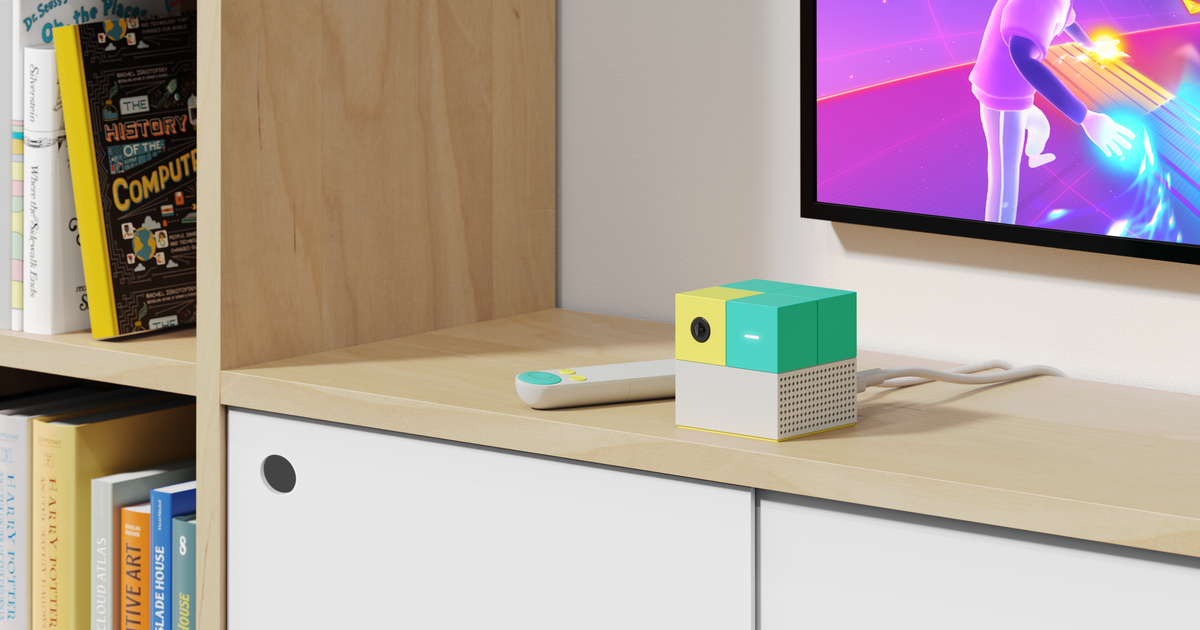
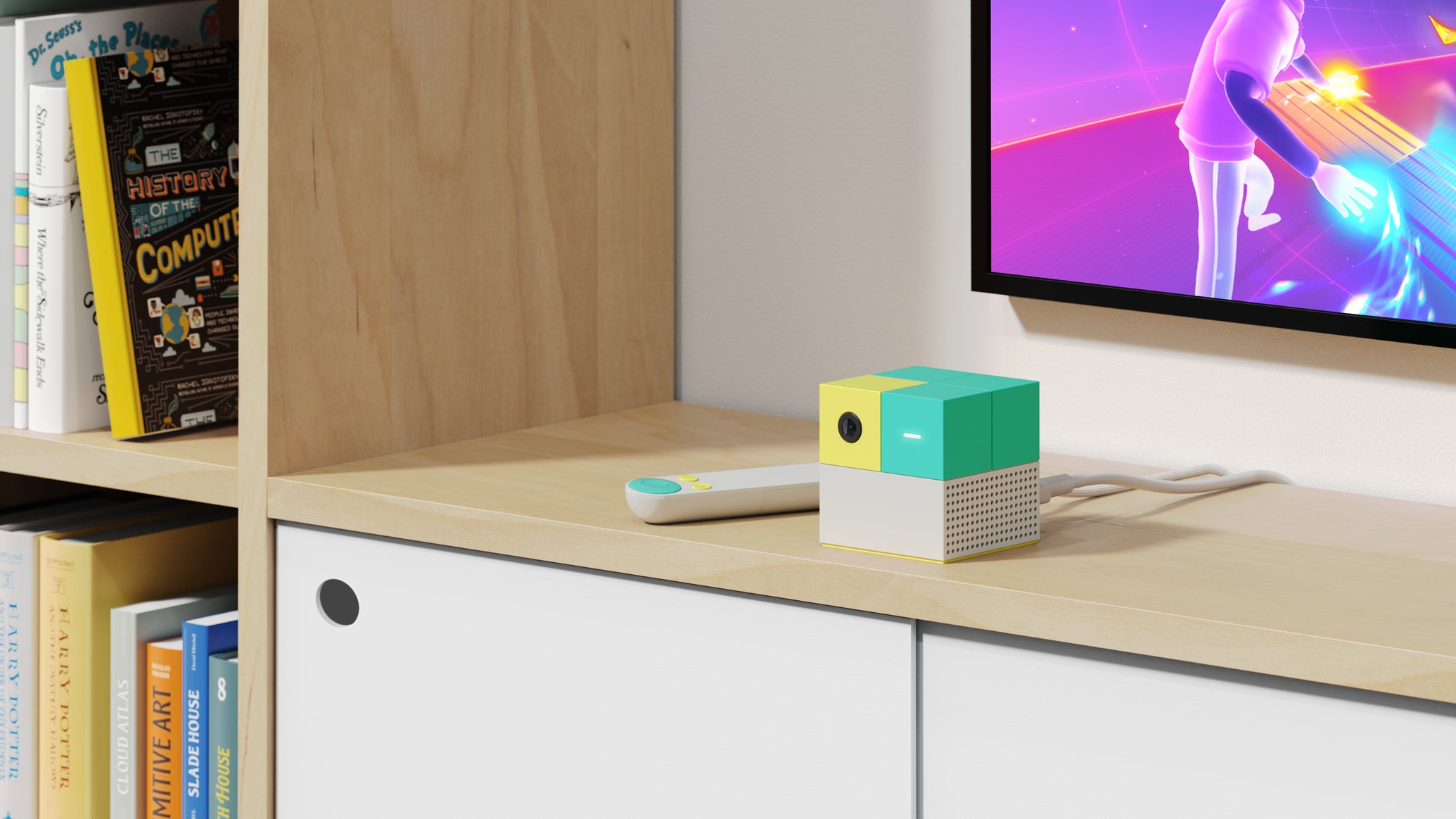

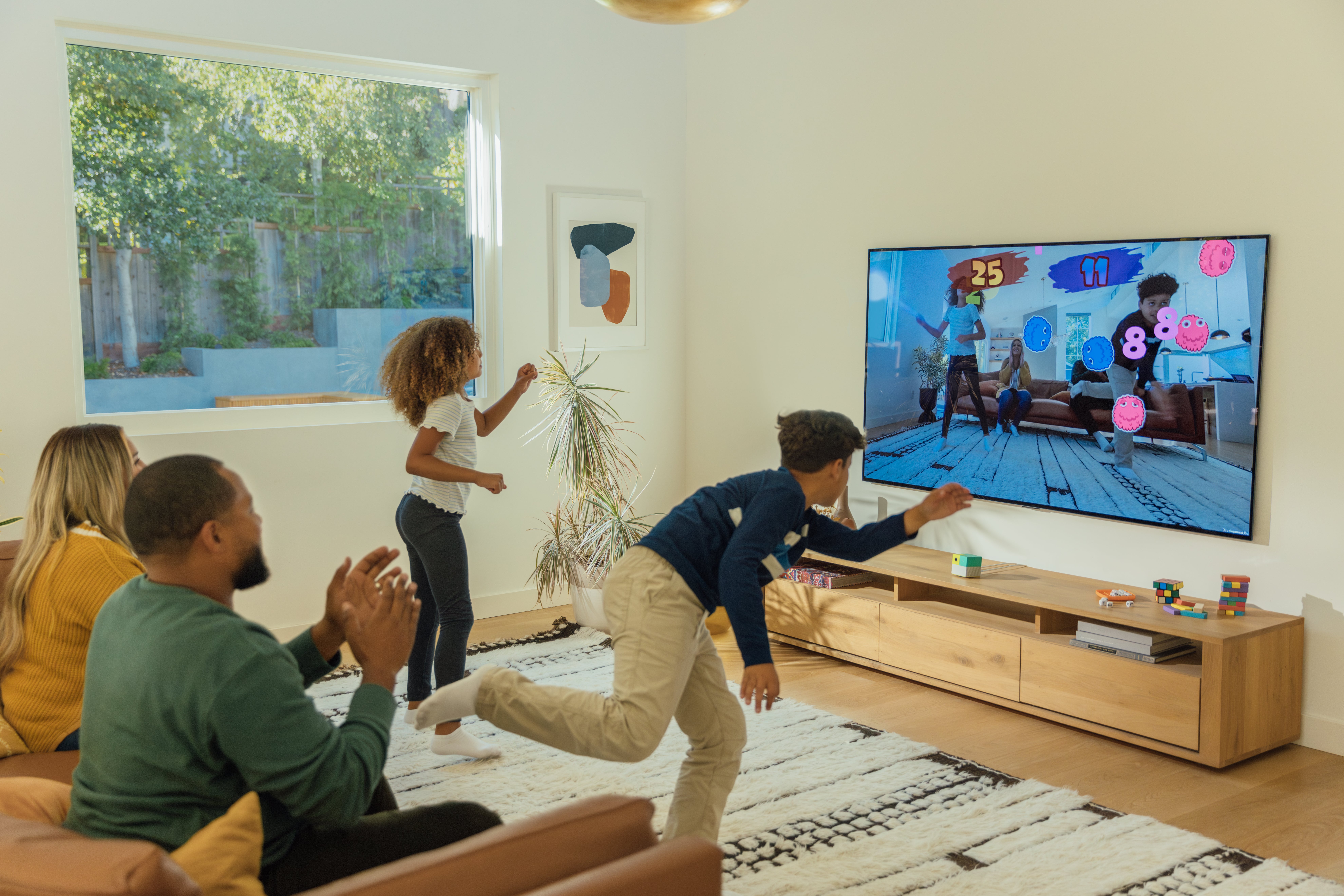
Overnight success stories are rare. While the Nex Playground console recently gained significant attention for its impressive Black Friday sales, its creator, Nex Team, has been developing for eight years. Launched in December 2023, this hardware features an AI-powered camera that tracks user movements, enabling players to engage with its family-oriented game library.
Currently, the console is available only in the US and Canada. In 2023, Nex Team shipped 5,000 units, followed by a substantial increase to 150,000 units sold the next year after securing placements in major US retailers like Walmart, Target, and BestBuy.
With strong sales in 2025, exceeding 635,000 consoles, the company is approaching 800,000 units sold to date. Projections indicate this figure will surpass 1 million in the first half of 2026. High demand currently makes the console difficult to find.
The company’s journey to this point has been extensive. Nex Team was established in 2017 by former Apple employees, including David Lee, who joined Apple after his first startup, EditGrid, was acquired in 2008.
Initially, the company focused on HomeCourt, an AI-powered basketball training app, which Apple featured at the iPhone XS launch. HomeCourt gained widespread popularity during the COVID-19 pandemic, leading to the creation of Active Arcade, a collection of motion-based games.
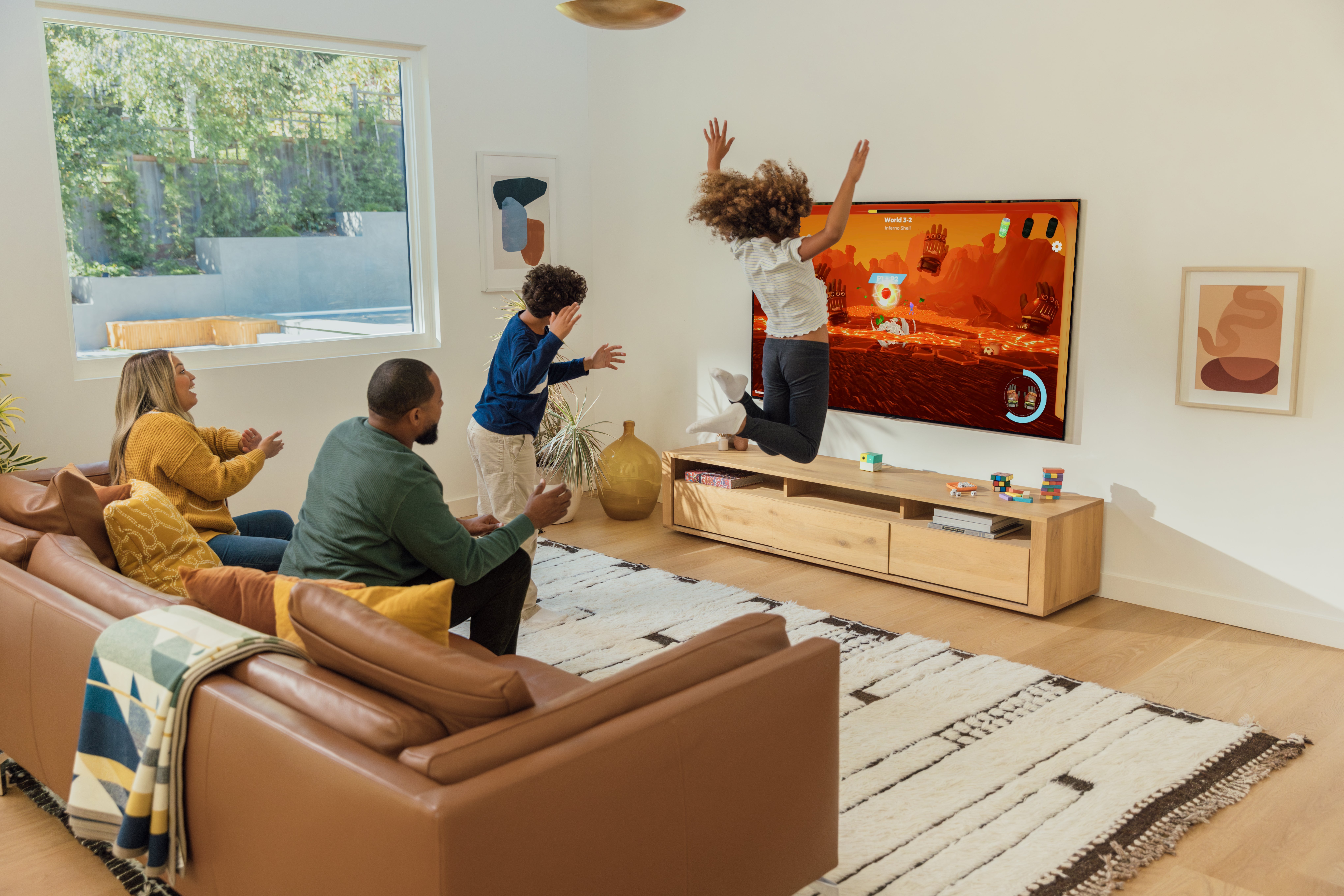
Nex Playground operates without controllers, relying entirely on motion tracking.
Active Arcade became a success in Asian markets, accumulating millions of downloads and “hundreds of millions of play sessions.” Lee and his team observed a tenfold increase in user retention when players connected their phones or tablets to a TV to play Active Arcade.
“Something people wanted was built, but it was built for the wrong platform,” explains co-founder and CEO Lee. “That’s how Nex Playground emerged.”
Developing a console, especially when some major platform holders appear to be shifting away from hardware like Microsoft’s Xbox transition, might seem unconventional. However, Lee states that the decision was made after an unsuccessful search for a smart TV capable of supporting the company’s ambitions. Nex Team concluded that a dedicated console was the optimal path.
“A hardware component allows for the delivery of the best experience,” Lee asserts.
Echoes of Kinect
The Nex Playground incorporates elements reminiscent of earlier industry innovations. It functions as an Android-based game box, similar to the 2013 Ouya console, but its core feature is controller-free motion tracking, akin to Microsoft’s now-discontinued Kinect. While Ouya had limited success, Kinect, along with the Nintendo Wii, significantly expanded gaming to new audiences. Yet, this type of motion-controlled experience has largely faded, with only a few Nintendo Switch and Switch 2 games utilizing it.
“The company builds upon the achievements of predecessors,” Lee acknowledges. “The Wii was a remarkably successful console for Nintendo, and Kinect sold extensively. The concept of playing games with one’s body appealed to a broad demographic. The focus is on how Nex Playground differentiates itself from previous attempts. If such concepts appeared and then vanished, there must have been underlying issues preventing their longevity.”
“Several differentiating factors are employed. With AI, a new technological foundation delivers experiences. It does not require handheld sensors or headsets, unlike many motion-based VR games. Only a camera is used to interpret motion. The technology has advanced beyond needing a sensor or complex camera system, as Kinect did. It’s simply an RGB camera with AI processing, with all functionality moved into software.”

One advantage for Nex Team regarding hardware is its relatively low cost. The Nex Playground has a suggested retail price of $249, often reduced to $199 during promotional periods. While not inexpensive, it is considerably more affordable compared to US prices for the Switch 2 ($449.99), PS5 ($549.99 with disc drive), Xbox Series S (from $399.99), or Xbox Series X (from $599.99).
“Maintaining an affordable price was crucial because the console serves families,” Lee states.
“Deliberate choices were made. For family games requiring four players, the cost of four controllers would be significant. A single camera is used to monitor the entire living room and identify four players. A very simple, affordable remote control is used for game selection, offering a clear cost saving.”
“Another instance of making the right choice involved the selected hardware capabilities. The console does not aim to compete with PlayStation 4, PlayStation 5, or Switch. Its hardware capabilities are roughly equivalent to a PS3, which is sufficient for building great immersive games. A conscious decision was made to select appropriate hardware. The console features a robust neural processor unit (NPU), ensuring strong AI capabilities.”
The Subscription Model
Nex Team also learned from past console successes, particularly those targeting families like the Wii, where high hardware sales didn’t always translate to profitable attach rates. The solution implemented is an $89-per-year subscription called Play Pass.
“More users are now receptive to subscriptions,” Lee observes. “It’s an excellent business model. In the past, the Wii expanded the market, but many users were unfamiliar with Mario. They purchased Wii Fit and Wii Sports but few other Nintendo games, making those customers less profitable.”
“The subscription-based model enables continuous innovation for the customers being served. It’s a straightforward, transparent business model fully aligned with parents, preventing children from constantly requesting more games.”
In terms of processing power, the Nex Playground is comparable to the PS3.
Lee continues: “It is sustainable and eliminates the need to consider other revenue models. The production budget has increased for three consecutive years, and these resources are being used to create improved games for customers.”
Most games on Nex Playground are exclusive to the platform. Half of the titles released in the past year resulted from second-party agreements where Nex Team collaborates closely with developers to maximize the platform’s potential.
Recently, Nex has seen increased interest from studios, including “some major games companies.” Consequently, the firm is expanding its staff to help manage studios joining its platform.
“The developer experience team is being expanded to support and onboard them on how to leverage the platform’s capabilities to create excellent games, and to collaborate with them to push boundaries together,” Lee states. “It’s a mutually beneficial relationship.”

Thomas Kang, Nex’s president and a veteran of Walmart’s Innovation arm, Amazon Games, and Disney, adds: “David is very deliberate about finding developers who share the company’s values and approach the world similarly, serving children and families. By finding individuals who have created games for that audience and understand the problems being solved, the product will ultimately be better.”
Nex Playground offers a diverse range of games. This includes new titles like Mirrorarma (a Snapchat-filter-on-a-TV experience), NexPets (a virtual pet game), and Starri (inspired by Beat Saber). Licensed intellectual property is also featured, with titles from Bluey, Barbie, Unicorn Academy, and Teenage Mutant Ninja Turtles. Sports games such as Go Keeper, HomeRun Heroes: StarStrikers, and Bowling Strike complete the lineup.
Nex Team believes that licensed IP has contributed to Nex Playground’s success.
“Having content like Bluey on the platform helps build credibility,” Lee explains. “Parents trust the platform more because they trust the IP to choose its partners wisely. Working with recognizable IP partners is very important. It’s also something children desire to interact with.”
One significant partnership Nex Team has secured is with the National Hockey League (NHL). “That partnership is growing,” Kang notes. “Other sports leagues have taken notice, and discussions are underway with all of them to make their sports accessible to children and families, helping them understand skill sets and rules, and potentially starting their journey into real sports. Parents truly appreciate this.”
Financial Backing
Nex Team boasts an impressive list of investors, including actors Simu Liu and Will Smith, footballer Thierry Henry, and the NBA, alongside Blue Pool Capital, Samsung Ventures, and billionaire Mark Cuban. Currently, the company is not seeking further investment.
“The company is beginning to achieve a self-sustainable state,” Lee says. “It is important to continue as a sustainable business.”
Following a dynamic 2025, Nex Team has ambitious plans for 2026. The company intends to launch Playground in Europe next year, with specific markets still being finalized. Subsequently, there are plans to introduce the hardware in some Asian markets.
“The expansion strategy is also very customer-focused,” Kang explains. “It will proceed at a very measured pace. When expanding internationally, careful consideration will be given to those markets, ensuring content and UI are localized.”
“The goal is to have a day where Playground could earn its place in every living room in the world,” states David Lee.
Nex Team anticipates the Playground will exceed 1 million sales during the first half of 2026. Beyond that, the company maintains numerous ambitious milestones, and its CEO is not rushing to achieve them.
“The goal will always consistently be to serve customers better and better,” Lee says. “The company is ambitious; it aims for a day where Playground could earn its place in every living room in the world. The objective is to establish the right relationship with every family served and ideally grow through word of mouth to reach more families. It’s a step-by-step process. Patience is a key attribute, which explains the eight years of development, and there is no hesitation in dedicating the rest of one’s life to this endeavor.”
Kang concludes: “There are 1.8 billion living rooms with TVs; there is a long way to go. This is just the beginning.”
