
GOG has recently addressed community inquiries regarding the use of AI-generated imagery on its digital storefront. A representative from GOG stated, “At this time, we won’t be able to comment publicly on our internal processes or tools. However, we’re aware of the conversations happening around this topic and the assumptions that can go with it.” This response followed an initial email from GamingOnLinux seeking clarification on the matter.
The discussion began after AI-generated content, specifically a prominent banner for the New Year Sale, appeared on the GOG store. This development comes amidst other significant news for GOG, including the launch of the GOG Patrons program and the company’s acquisition by one of its original co-founders. Furthermore, a recent job listing for a Senior Software Engineer, which mentions “Actively use and promote AI-assisted development tools,” has added to the ongoing conversation.
Concerns about the AI-generated banner were initially highlighted in a Reddit post. Upon closer inspection, the image revealed several inconsistencies, such as a console appearing to be melting and the peculiar inclusion of a Nintendo-style retro console on a PC gaming platform. The image in question is displayed below:
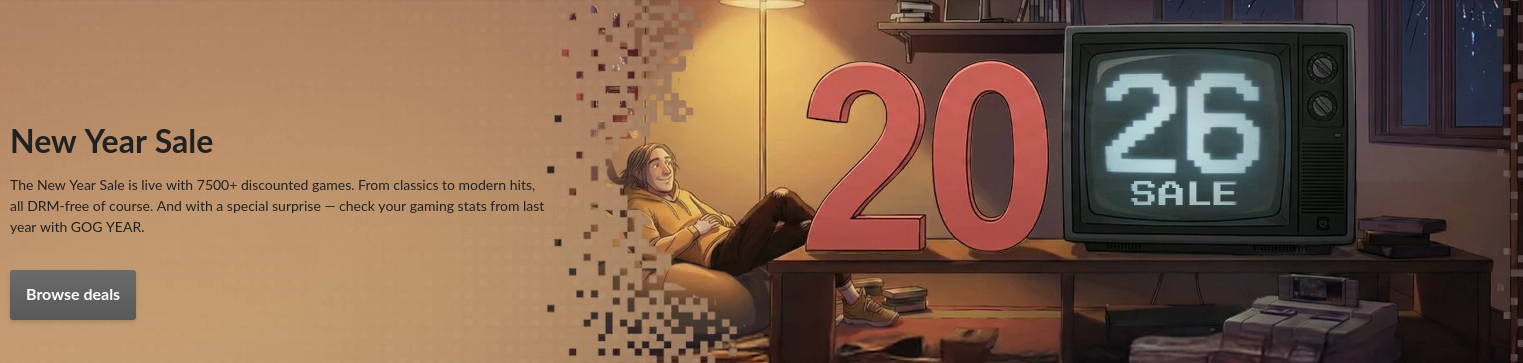
A GOG team member, “KosmicznaPluskwa,” later confirmed on the official GOG forum that the “current sale banner is fully AI.” While stating this was not their personal work and they were not a company spokesperson, the individual expressed strong personal views on the matter. They emphasized the importance of original artwork, stating, “I enjoy seeing cool new artworks out there… More cool art to see on top of buying art (video games in our case here) is always more cool art in the world and this is what I’m happy to have. So with everyone also feeling strongly in this thread – I’m with you. And continue speaking up – in the face of future we don’t like to see, complacency is not the way.”
The increasing use of AI generation, even for seemingly minor elements, raises questions about its broader acceptance and the potential displacement of human artists. This trend could lead to a reduction in unique, intentional artistic expression, replaced instead by less refined, AI-generated content. For a platform like GOG, which has faced challenges in the past, adopting such cost-cutting measures by substituting human creative work with AI might not be well-received by the wider gaming community, potentially impacting customer goodwill.
