

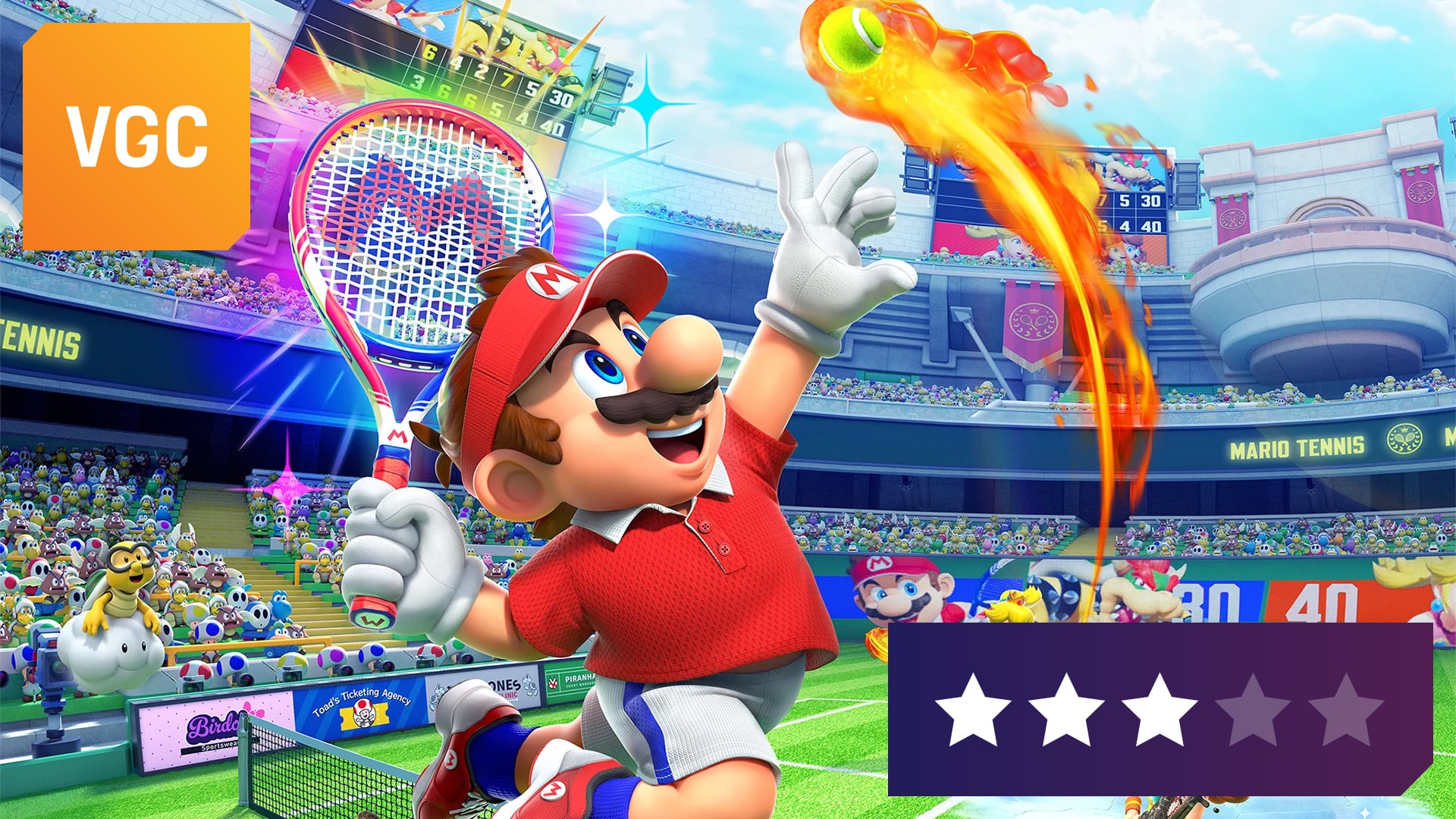

Mario Tennis Aces, released almost eight years prior on Switch, was generally considered a competent tennis game, though it faced criticism for its special shots and a notably brief Adventure Mode.
Its Nintendo Switch 2 successor, Mario Tennis Fever, maintains solid core tennis mechanics but, unfortunately, carries over the same problems as its predecessor.
On the court, players familiar with the Mario Tennis series, even from the N64 era, will find the gameplay in Fever recognizable. The standard top spin, flat, and slice shots are present, along with lobs and drop shots. A welcome change is the ability to assign drop shots to a single shoulder button, simplifying last-second execution.
Every new installment in the series introduces a unique on-court mechanic, such as the Mega Mushroom in Mario Tennis: Ultra Smash on Wii U or Chance Shots in Mario Tennis Open on 3DS. Mario Tennis Fever continues this trend with Fever Rackets, a set of 30 unlockable rackets, each possessing a distinct special ability.
These abilities activate once a special meter is full. When the ball approaches, pressing the X button allows a brief moment to aim the shot before it launches, initiating its unique effect.
Certain Fever Rackets introduce court hazards like fire bars, volcanoes, or Thwomps, which can stun opponents and deplete their life bar. A depleted life bar results in a ten-second slowdown (or sideline removal in doubles). Other rackets offer effects such as slippery courts, wildly swerving shots, or extended reach for missed balls.

The Fire Flower racket, acquired early in the game, proves to be one of the more effective options.
However, not all Fever Rackets are equally effective. Players will likely discover that fewer than a third of the 30 available rackets significantly impact gameplay. It is probable that the online community will quickly establish a meta, favoring a select few rackets with clear advantages over the rest.
Although special shots in previous Mario Tennis titles sometimes risked breaking the game, Fever Rackets do not guarantee a win. If an opponent volleys a Fever shot before it bounces, the effect reverses, targeting the player who initiated it. If it lands on their side, it backfires. This mechanic can lead to intense volley exchanges between skilled players, as they send the powerful shot back and forth until it bounces and activates its effect.
Experienced players will inevitably discover workarounds. One effective strategy involves using lobs to push opponents to the back of the court. When the lob is returned, the front of the court becomes vulnerable, allowing a Fever shot – always executed as a smash, regardless of ball height – to be aimed forward, frequently triggering its effect.
“Before long, players will realize that of the 30 rackets on offer, less than a third of them can have a major impact on the game.”
Fortunately, both online and offline multiplayer modes offer the option to play standard tennis matches without Fever Rackets. Even without them, potential exploits exist; for instance, Donkey Kong appears overpowered due to his high Speed, Control, and Power stats, with his only weakness being Spin, which is arguably less crucial.
A B-button Slice hit from the net, aimed to the opposite side of the court, also seems somewhat overpowered. This shot sends the ball at an extremely wide angle, and the game’s infrequent out-of-bounds calls make it a highly effective method for scoring points or putting opponents in a difficult position.
Despite these potential issues and the likelihood of various exploits appearing online, the core gameplay remains as solid as previous Mario Tennis titles. Controls are precise, hitting the ball feels rewarding, and forgiving positioning allows for satisfyingly long rallies between skilled players.
Although Mario Tennis games are primarily known for multiplayer, Nintendo has marketed this title to solo players through its Adventure mode. This mode features Mario and Luigi transformed into babies, needing to re-learn their skills to revert to their adult forms.
For those considering Mario Tennis Fever primarily for its Adventure mode, a reevaluation might be necessary. Similar to recent iterations, this mode is notably brief. Competent players can expect to complete it in approximately three hours, with no apparent post-credits content.
This mode feels peculiar, as many elements suggest it was initially intended to be more expansive. The initial segment occurs in a tennis academy, where players engage in mini-games to hone their skills. The game emphasizes that these are Level 1 mini-games, implying progression to higher levels. However, players are never directed to revisit them, meaning they do not reappear if in-game instructions are followed.
“If Adventure mode is the main reason for considering Mario Tennis Fever, a reevaluation might be necessary, as it is disappointingly short once again.”
Upon graduation, players access a World Map, creating the impression of a vast adventure. However, the World Map proves arbitrary, with only a few additional locations visited before reaching the final boss and completing the game. The inclusion of three save slots is also odd; since players select their user account at the start, each receives three slots, which seems entirely superfluous for a three-hour game lacking branching paths.
Players also consistently level up after each match, with stats gradually increasing. This again implies a lengthy progression, but it ultimately leads nowhere. Stats cannot be customized to suit a specific playstyle, nor can they be exported for online play, making this another strangely arbitrary feature.
What proves particularly frustrating is the quality of the limited content within Adventure mode, especially post-graduation. The game skillfully presents a diverse array of mini-games and boss battles, creatively utilizing core tennis mechanics for various combat scenarios. The disappointment lies in its premature conclusion, just as it begins to feel genuinely engaging.

Mix it Up features gameplay on courts filled with various gimmicks.
Mario Tennis Fever ultimately feels like a jack-of-all-trades, mastering none. It offers a broad selection of options, including Tournaments, Trial Towers (featuring three challenge groups), a motion control mode, and the Mix it Up section with its gimmick-filled courts. However, none of these options feel fully developed, and most unlockable rackets and characters are acquired through basic ‘play X matches’ requirements, rather than unique challenges.
Mario Tennis Fever is not a poor game; it exhibits a degree of presentational and mechanical polish uncommon in other sports titles. Families and friends seeking casual entertainment will likely find enjoyment. However, for players expecting a more profound experience from this Switch 2 entry, the game falls short, a double fault in tennis terms.
Mario Tennis Fever Review Summary
Mario Tennis Fever from Camelot delivers a reasonably solid sports experience. However, its notably brief single-player mode and the significant potential for imbalance, with or without Fever Rackets, prevent it from achieving greatness, leaving it merely good.
- Solid core tennis gameplay
- Expanded roster with 38 characters
- Fever Rackets offer fun mechanics and can be countered
- Adventure mode is extremely short
- Fever Rackets are likely to be exploited
- Certain characters are overpowered
