

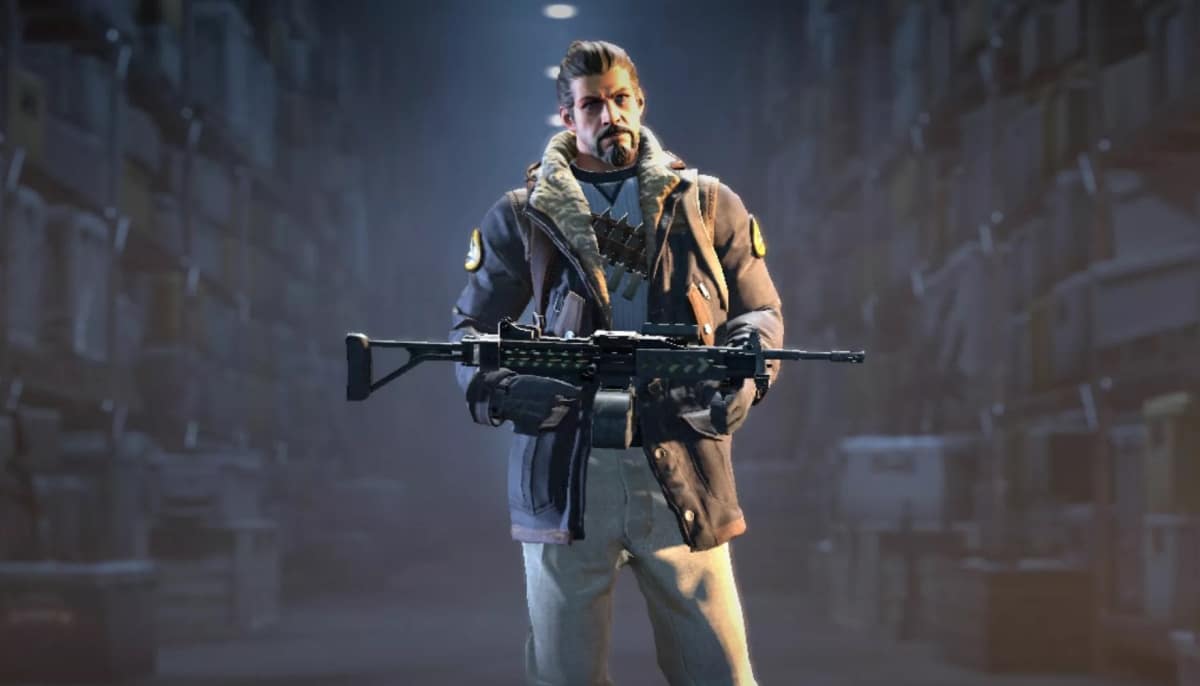
Image credit: Valve
TL;DR
- Cheating infects the pro scene with players like KQLY and emilio getting caught and handed down lifetime bans.
- Match-Fixing uncovers an industry of pro CS players throwing matches for skins in an unregulated market.
- Skins & Gambling: Unregulated betting of CS2 skins leads to content creators misleading their underage fans into gambling.
- The Coach bug allowed coaches like HUNDEN to abuse an exploit to gain an unfair advantage for his teams in real-time competitive matches.
Since the dawn of competitive Counter-Strike, a near-constant tension has existed between the pursuit of competitive purity and the allure of incentives surrounding it. CS2, which replaced CS:GO, was meant to be a clean slate. Instead, it inherited many of the same integrity issues that plagued the game’s history.
Cheating, Match-fixing, and the shady introduction of skins and gambling; these issues have been present long before the CS2 release date. CS2 has emerged from the shadow of CS:GO’s rocky past, shaped by years of unresolved issues. We will explore the specifics of each of these issues, ranging from top-tier pro players caught cheating to entire teams receiving lifetime bans for match-fixing.
Cheating: An old problem that never left Counter-Strike
KQLY with Team LDLC at ESL One Cologne 2014 / Image credit: HLTV
Cheating has been a long-talked-about issue within the CS2 game. However, some of the game’s most infamous scandals originated from cheating not just in the casual scene but also in the professional scene. Players who we’ve seen on the main stage playing for tier 1 teams, on LAN and Online play.
In 2014, Hovik “KQLY” Tovmassian was banned for cheating. He played for one of the best teams in the world. This French player took the stage at some of the world’s most well-known CS tournaments, including StarLadder, DreamHack, ESL One: Cologne, and Katowice, competing for the infamous teams Team LDLC and Team Titan. While claiming the ban was “justified”, he claimed to only use it for a week and not in any competitive matches. This was not confirmed by Valve and remains a stain on the competitive integrity of the game.
Not only in 2014 was KQLY banned, but Joel “emilio” Mako was also VAC banned this one more publicly facing than the last, as he was banned mid-match at Fragbite Masters, Emilo playing for Team Property, was against Hellraisers on round 12, the server read:
“emilioOOo<25>” disconnected (reason “VAC banned from secure server,” read the server log.”
This is happening so close to KQLY’s ban, which reinforced the fear that the anti-cheat system was struggling to keep up with the ever-growing CS player count, and that they couldn’t trust the integrity of top-level games.
Match-fixing: the scandal that changed Counter-Strike forever
BUYPOWER players were all handed lifetime bans from Valve tournaments / Image credit: iBUYPOWER
Cheating exposed the gaps in the safeguarding of Counter-Strike’s competitive scene, and Match-Fixing showed its vulnerability under financial pressure. The biggest scandal, iBUYPOWER, is still remembered to this day over a decade later and has permanently reshaped how it is enforced.
In 2014, four out of five iBUYPOWER players were handed lifetime bans from Valve for purposely throwing a match. This was a CEVO tournament against the team NetCodeGuides in exchange for CS skins. This was a blatant attempt to exploit the unregulated skin betting market that surrounded CS:GO at the time.
This resulted in four of the players and a few more involved (Sam “DaZeD” Marine, Joshua “steel” Nissan, Braxton “swag” Pierce, Keven “AZK” Larivière, Duc “cud” Pham, and Derek “dboorn” Boorn, along with organizer Casey “caseyfoster” Foster) receiving lifetime bans from all Valve-sponsored events.
This has set a clear precedent from Valve, enforcing that they have a zero-tolerance policy for match fixing. This was later seen as well after investigations into the North American MDL league that saw widespread match fixing usually with lower tier teams with smaller salaries this includes big names still such as Team Epsilion, when evidence was presented that they were match fixing they also received life time bans as this was years later it instill a sense of worry that the threat of match maniupulation still looms over the scene.
Gambling
High Value Skins and Stickers are used to gamble in an unrefulated way / Image credit: Valve
Few issues have plagued Counter-Strike more than the introduction of skins and CS2 gambling with these in-game cosmetics. This economy has evolved into a full self-sustaining system that blurred the lines between cosmetic items and in-game currency. During the early stages of this, we saw sites exploit the grey area of in-game gambling items, so they didn’t need official gambling licenses or verify the ages of players.
This drew the attention of mainstream media as stories of underage children spending their own and their parents’ money on gambling developed addictions at such an early age, showing the lengths some of these sites will go to in order to make money. This was never more apparent than when popular streamers were showcasing these sites, encouraging their younger fanbase to partake, when secretly they owned the sites and were profiting off the losses
The most iconic sites and owners are CSGO Lotto and CSGOShuffle, which no longer exist due to their ownership being uncovered. The content creators Trevor “TmarTn” Martin and Tom “Syndicate” Cassell owned CSGO Lotto, and James “PhantomL0rd” Varag owned CSGOShuffle. The stories of all three were the same, where they created videos and streamed on Twitch, showcasing these sites and promoting them to their audience.
CSGOLotto eventually reached a settlement with the Federal Trade Commission over “Deceptive Advertising Practices,” and CSGOShuffle closed down, and the owner was banned from Twitch.
Although Valve has taken action against this, widespread gambling in the CS2 market remains prevalent. These sites now require age verification and honest, clear branding for advertising and sponsorship from content creators to ensure we do not repeat the past.
The Coach Bug: An Integrity Crisis at the Highest Level
HUNDEN was one of the coaches handed a 12-month ban for use of the camera exploit / Image Credit: Esports World Cup
The Coach position is usually held by legends in the Counter-Strike esports scene. Older players who have retired from competitive play and are still looking for the chance to compete, you would think they know better, but due to a bug in the game, which enabled the coach role in the server to have a unintended spectator view which allowed them to provide the players with information that they wouldn’t normally be able to obtain like player positions.
The fallout was extensive following this discovery; an investigation was led by the esports integrity commission, which discovered that multiple coaches had abused this practice across all regions, not just in one particular area. The bug was exploited to varying degrees, leading to a range of actions taken by Valve, including fines, temporary bans, and lifetime bans. Probably the most famous coach, Nicolai “HUNDEN” Petersen, who was the first coach to be handed a ban.
This left many questions for the viewers of the CS tournaments, as we do not know how long this exploit was used and how it went unnoticed. This wasn’t just a failing on Valve’s part, but also on the part of tournament organisers who were oblivious to this happening online and on LAN.
While this issue was quickly resolved before the CS2 release date, it left a lasting impact on the scene, demonstrating that integrity challenges are not exclusive to players but also affect everyone involved in the scene.
Conclusion
Counter-Strike 2 introduced a new engine, advanced graphics, and a modern competitive framework, leveraging the lessons learned from CS: GO. However, the integrity challenges the history of this game has faced continue to cast a shadow. This includes cheating by pro players like KQLY, match-fixing by iBUYPOWER, CS2 gambling by known creators like Syndicate, and coaches abusing exploits like HUNDEN.
As CS2 continues to flourish and grow, the scandals of the past fade into the background, and Valve continues to refine the rules and regulations, demonstrating its commitment to the credibility, integrity, and longevity of the CS2 matches we love to watch.
FAQs
Does CS2 have a cheating problem?
Yes, CS2 is still struggling with cheating across both matchmaking and premier gaming modes despite the release of VAC Live. There is an endless number of complaints from players about aimbots, wallhacks, and smurfing ruining the game for the more casual players.
What did CS2 do to skins?
Recently, Valve updated the trade-up contract system to allow trading of red skins for knives. This massively increased the number of knives out there and crashed the market on them.
Is CS2 losing popularity?
No, according to SteamDB, CS2 consistently has over 1.5 million players at peak times, dropping to around 600,000 during the lowest hours. This has shown that the CS2 player count has remained constant and even improved over time.
Is it safe to play CS2 now?
Yes, while there is still a cheater problem, the majority of your games will not have cheaters. If players are more concerned about the Anti-cheat of Valve servers, they can use FACEIT, which features a kernel-level anti-cheat considered safer.
Do CS2 cheaters get banned?
Yes, with the introduction of VAC Live, there is now real-time monitoring of games, and obvious cheaters should be banned from the game. However, they are also still using signature-based bans, so Valve will regularly run these VAC waves and cleanse the CS2 servers of cheaters.
