

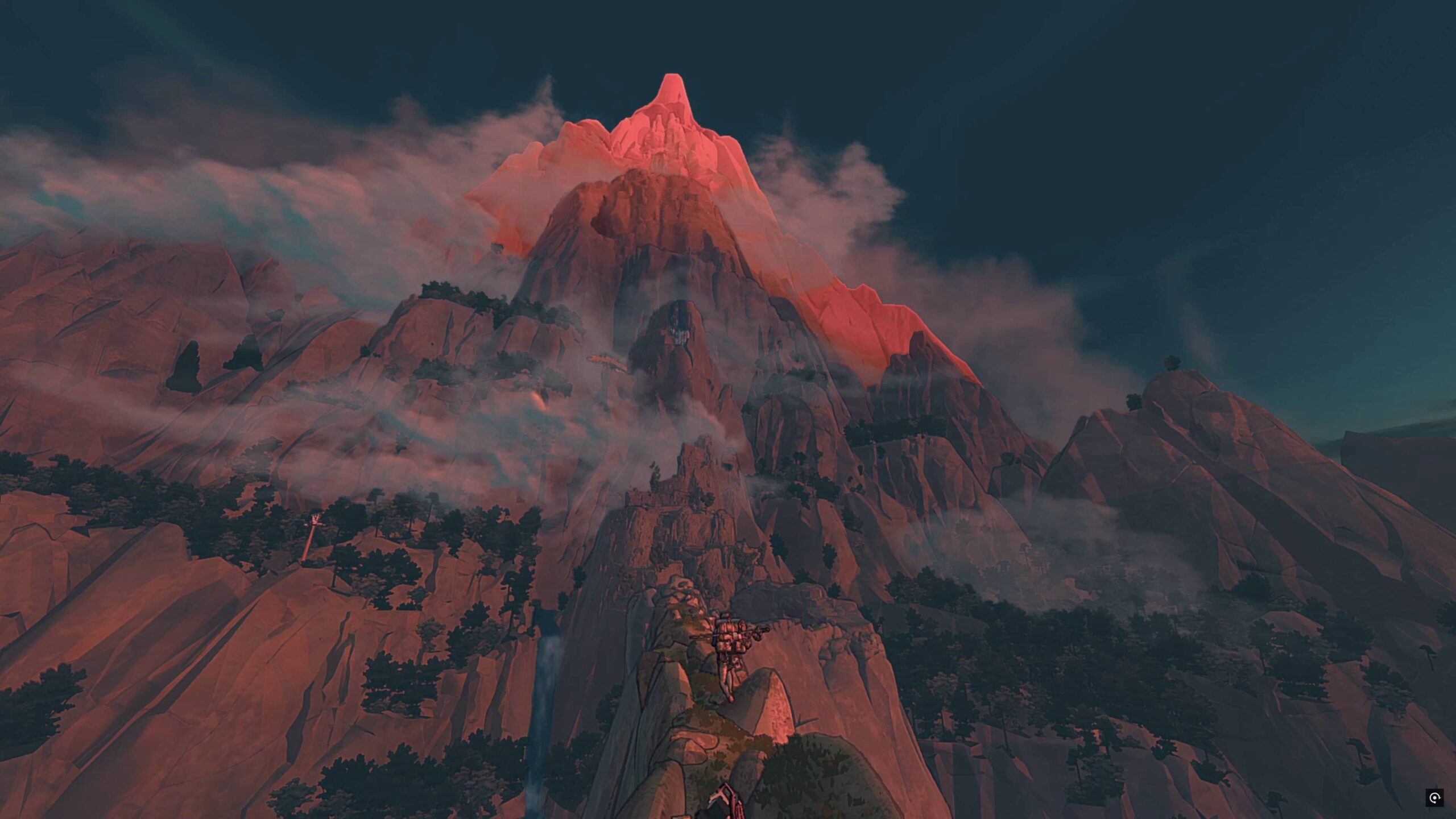

Cairn presents a realistic and complex climbing experience, demanding a deep understanding of the mountain and its protagonist, Aava. Reaching the summit of Kami requires developing strong climbing skills, intuition, and effective use of all available tools. Many aspects of the game are best learned through practical experience, especially when facing the more dangerous challenges at higher altitudes. The following advice can help climbers achieve greater heights and avoid perilous falls on their journey to Cairn’s peak.

Planning, Patience, and Stamina are Key
The climbing gym at the beginning of Cairn offers valuable training for the challenges on Kami. It is beneficial to try all the available walls to prepare for what lies ahead. The gym emphasizes three crucial elements: route planning, slow climbing, and stamina conservation.
Climbers can survey the wall by angling the camera to look straight up or by pressing L1 for a zoomed-out view of the entire area. Always checking the path prevents getting stuck or trapped, which would force a descent, wasting energy and resources.
Patience is vital in Cairn. It is almost always advisable to climb slowly and carefully, even on seemingly easy sections. Successful climbing relies on selecting good handholds and footholds. Aava’s limbs will begin to shake when tired, indicating a poor position or uneven weight distribution. Remaining in such a position for too long will lead to a slip and fall. Moving too quickly up the wall increases the likelihood of committing to bad holds unknowingly, resulting in Aava tiring out and being unable to reach a more secure position before falling. A slow pace ensures the safety of chosen holds before proceeding.
Managing Aava’s stamina is also crucial during an ascent. From a stable position, pressing Triangle allows Aava to shake out a tired limb, restoring stamina for the next push. The color that flashes when Triangle is pressed indicates stamina recovery: green signifies good recovery, while yellow warns of caution, indicating a need for a better rest position soon to avoid trouble. Regular stamina recovery is essential to prevent falls, so frequent short rests are recommended.
Throughout the climb, pay close attention to Aava’s reactions and vocal cues. Slow, regular breathing suggests she is performing well, but quickening breath indicates fatigue and worry. A more natural, comfortable position is needed for her to rest and recover stamina.
Frequent Piton Placement is Essential
Pitons are indispensable, and establishing the habit of placing them at regular intervals on every wall is crucial. Clipping into a piton prevents falls and acts as a checkpoint, allowing for quick returns if a slip occurs. Pitons also offer a resting point; pressing X to “off belay” fully restores Aava’s stamina. When off belay at a piton, backpack items become accessible, enabling food consumption or chalk refills.
To place a piton, hold Up on the directional pad, then press X at the correct moment as a slider moves across a bar. Practicing piton timing is vital; accurate timing not only prevents piton breakage but also allows for quick placement in emergencies when Aava is about to fall. Do not wait for Aava to panic before setting a piton. Develop the habit of placing them regularly when the climb is going well, avoiding frantic placements to prevent a fall.
Kami provides an abundance of pitons, and Climbot can craft one piton from two sets of scraps, so concerns about running out or wasting them are minimal. They are fundamental to a successful climb.
Not All Holds Are Equal
Especially when starting out, climbers might wonder why Aava tires or falls on walls seemingly full of holds. The reason is that some holds are smaller and more difficult to use than others, and their quality is not always immediately apparent. Vertical cracks, for example, may appear useful but can quickly cause fatigue. Look for large ledges for standing and gripping with hands to provide Aava with more comfortable resting positions, and avoid using smaller holds for extended periods. Listen for Aava’s comments to determine if a chosen position is comfortable, and restore stamina frequently.
Climbing slowly allows for testing each hold before moving to the next, observing how Aava manages it, and determining if she should move back to a more stable position. Always observe how Aava places her hand or foot; sometimes a hand or foot might be placed on what seems like a grip, only for Aava to flatten it against the rock, indicating she is braced but not truly holding anything. It is generally advisable to stop and reset that limb before continuing, as she will tire quickly without a solid grip.
Remember to Use Chalk
Chalk significantly enhances grip and is often critical for overcoming difficult walls. Chalk is almost always available, and its use is nearly always beneficial. Quickly apply chalk by holding Right on the directional pad, making the next 12 handholds extra grippy. Chalk is excellent for making poor holds easier to grip and even enables movement over rock without good holds to reach a better spot, provided the movement is swift. Use chalk frequently, especially when holds are small or widely spaced. Climbot generates more chalk whenever trash is composted, ensuring a consistent supply.
Manual Limb Selection for Enhanced Control
Cairn’s developers suggest using the automatic system for limb selection with each new foot or handhold. However, there will be many instances where a foot needs to move, but the game suggests a hand, or vice versa, and moving the wrong limb can sometimes be disastrous. Climbers can manually select which limb to move by holding R1 and highlighting it with the right analog stick. Manual limb selection is crucial for quickly moving from a dangerous position to a safer one, and it is also good practice for maintaining complete control over Aava and executing precise movements.
Adapt to Different Rock Types
Most rock walls are gray and craggy, but smooth, glossy brown rock patches will occasionally appear. This rock is more slippery, often features smaller holds, and is too dense for piton placement, making it potentially hazardous. Check the route for brown rock patches to either climb around them or plan an intelligent path over them. Chalk and food boosts are also highly effective for these climbs.
Exploration is Rewarding
Kami was once inhabited by the troglodytes, and while few remain, their homes, temples, and villages can still be visited. Exploring different caves and structures can reveal save points, vital supplies, and special items that ease the climb. Troglodyte pitons are the most valuable find—they are indestructible and can penetrate any rock type. Other discoveries may include chalk bag upgrades, food recipes, and more. Exploring caves and troglodyte structures can also uncover alternative, often easier or safer, routes up the mountain.
Ice Climbing: Easier but Slower
Later in the ascent of Kami, ice walls will appear. Aava is equipped with ice axes and spikes for her feet, which automatically deploy when a limb is aimed at ice. These walls can be simpler to navigate than rock because handholds or footholds can be created anywhere. However, climbers must proceed more slowly and recover stamina more often, as ice climbing demands greater effort overall. Aim to place ice axes and shoes into cracks in the ice. If an axe or shoe bounces off the ice before settling, it indicates a poor hold, and it should be repositioned, as Aava will soon slip. If no crack is available, one can be created by holding and then releasing Square, kicking a foot or slamming an axe into the ice. This effort drains stamina faster, so frequent breaks are essential.
