

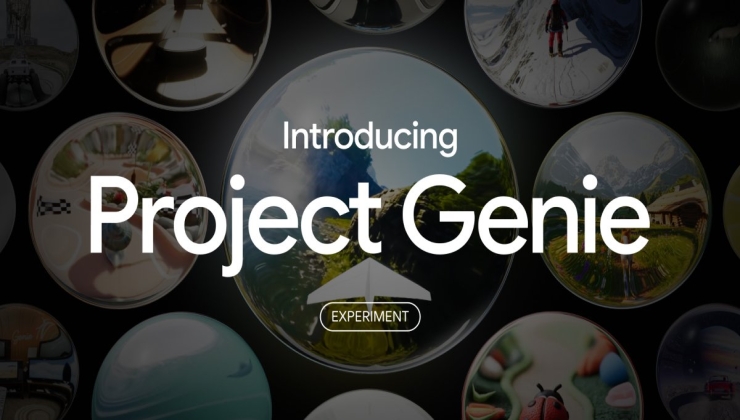
Google introduced Project Genie in late January, an experimental generative AI designed to create interactive, explorable worlds. The concept allows users to generate entire virtual environments from a text prompt, eliminating the need for manual model creation, texturing, or coding.
As such tools advance, they are expected to raise more questions regarding AI’s impact, particularly concerning intellectual property. Jay Peters of The Verge, for instance, demonstrated its capability by generating worlds reminiscent of Nintendo properties. Numerous similar instances have appeared on social media, where users have created environments closely mirroring existing video game company IPs.
Project Genie is currently in an experimental phase and has limited availability, accessible only to Google AI Ultra subscribers within the US. Google’s announcement noted that certain previously revealed features, such as “promptable events that change the world as you explore it,” are not yet integrated into this prototype.
The introduction of this technology reportedly led to some investor concern, with stocks of companies like Take-Two Interactive, Roblox, and Unity experiencing declines, as documented by Reuters.
During a recent earnings call, Take-Two Interactive’s Executive Chairman & CEO, Strauss Zelnick, addressed questions about generative AI’s potential threats and opportunities for the company. Zelnick expressed enthusiasm for generative AI, noting that the video game industry has always relied on machine learning and artificial intelligence. He stated that Take-Two is actively integrating generative AI through numerous pilot programs and implementations across its studios. This integration aims to enhance efficiency, reduce costs, and enable creators to focus on more engaging tasks by automating mundane ones. Zelnick emphasized that the company’s strategy involves being creative, innovative, and efficient, with generative AI contributing to both innovation and efficiency, and potentially boosting creativity by providing new digital tools for creators.
Karl Slatoff, President of Take-Two, also commented on Project Genie, clarifying that it is an early-stage technology and not comparable to a full game engine. He described it as resembling a “procedurally generated interactive video” with acknowledged limitations. Slatoff highlighted that game development encompasses many elements beyond world creation, such as storyline, emotional connection, atmosphere, and mission structure, which AI and world builders cannot fully replicate. He suggested that while Project Genie could improve and streamline a small component of game development, it does not replace the broader creative process.
As such experiments continue to evolve, the volume of AI-generated content is expected to increase significantly. Even if the current enthusiasm for generative AI moderates, its influence is likely to reshape software development practices across various sectors. The technology offers legitimate applications, though its potential is often over-hyped by some, leading to its implementation in unnecessary contexts by companies seeking to justify its inclusion and potentially increase product costs.
