

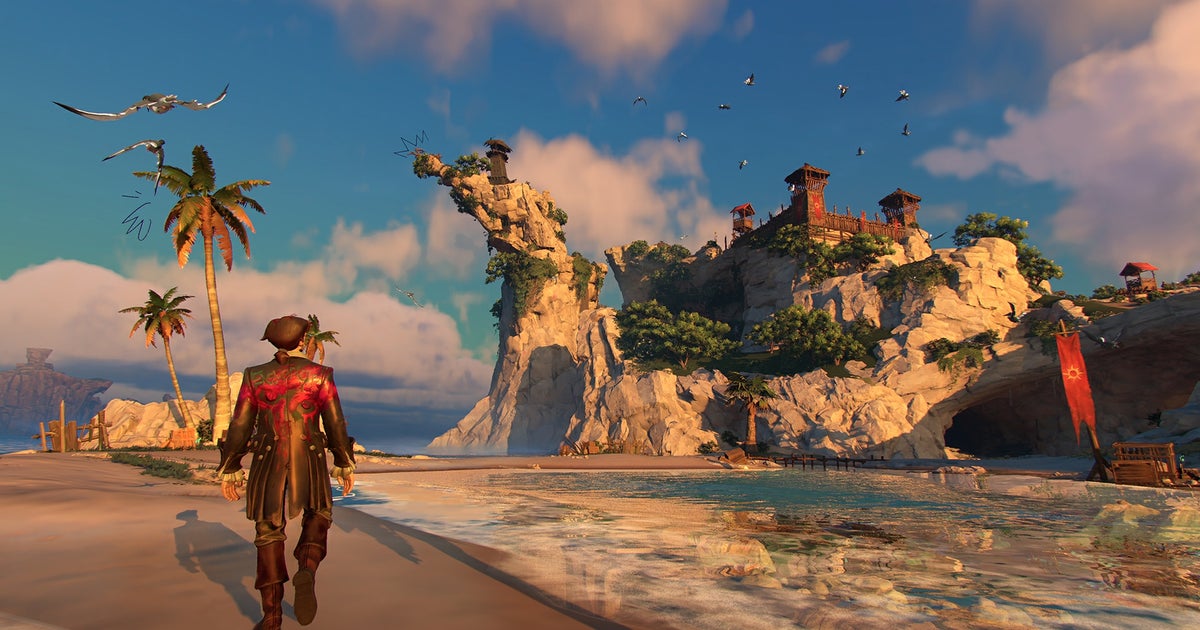
The pirate-themed game Sea of Remnants, developed by Joker Studio and NetEase, aims to redefine design possibilities within its genre, particularly concerning storytelling and the cross-market monetization potential extending beyond the game itself.
China’s gaming market is experiencing rapid growth, with projections suggesting it could exceed $50 billion by 2025, and notably, generate $20 billion in international revenue. Following the global success of titles like Genshin Impact, many developers are now adapting their successful domestic live-service free-to-play games for a worldwide audience. NetEase has been a significant player in this trend, with games such as the wuxia-inspired Where Winds Meet, and Sea of Remnants represents their newest effort to achieve international acclaim.
Sea of Remnants is a creation of Joker Studio, known for Identity V, a PvE game similar to Dead by Daylight featuring unsettling dolls. The studio’s latest endeavor is a pirate-themed RPG set at sea, where wooden puppets replace human characters. Like its predecessor, this title is free-to-play and incorporates gacha mechanics.
A visit to NetEase’s extensive Hangzhou campus in China provided an opportunity to engage with Joker Studio and experience Sea of Remnants firsthand. Observing the office environment revealed immediate distinctions in business scale and work culture compared to Western practices. Joker Studio operates within one of two vast campuses, which accommodate various NetEase enterprises, including gaming and e-commerce. Each campus employs nearly 10,000 individuals, all working on-site.
.jpg?auto=webp "Inside NetEase: A Look at Sea of Remnants Development and Chinese F2P Monetization 1")
The facility features a dedicated employee welfare team, a large gym with basketball and badminton courts, and an on-site canteen providing spacious dining areas. Employees receive an allowance for six weekly lunches, with an alternative café offering themed beverages, bubble tea, and cakes made from NetEase’s own food business ingredients. Additionally, a variety of services are available to employees across NetEase’s diverse companies, such as on-site delivery for orders placed through NetEase’s e-commerce platforms.
The sheer size of the campus surpasses even the largest international studios, which frequently operate across multiple buildings or cities, and often support remote work. Few gaming companies possess such extensive involvement in diverse industries beyond games.
NetEase’s expansion into a multi-industry conglomerate, making it one of China’s largest companies, has driven a significant increase in its office footprint. The visited campus recently opened as part of a staged expansion of the company’s Hangzhou headquarters, where NetEase has been located since its establishment in 1997. This campus functions as a versatile living and working environment, fostering inter-team interaction and collaboration in shared areas.
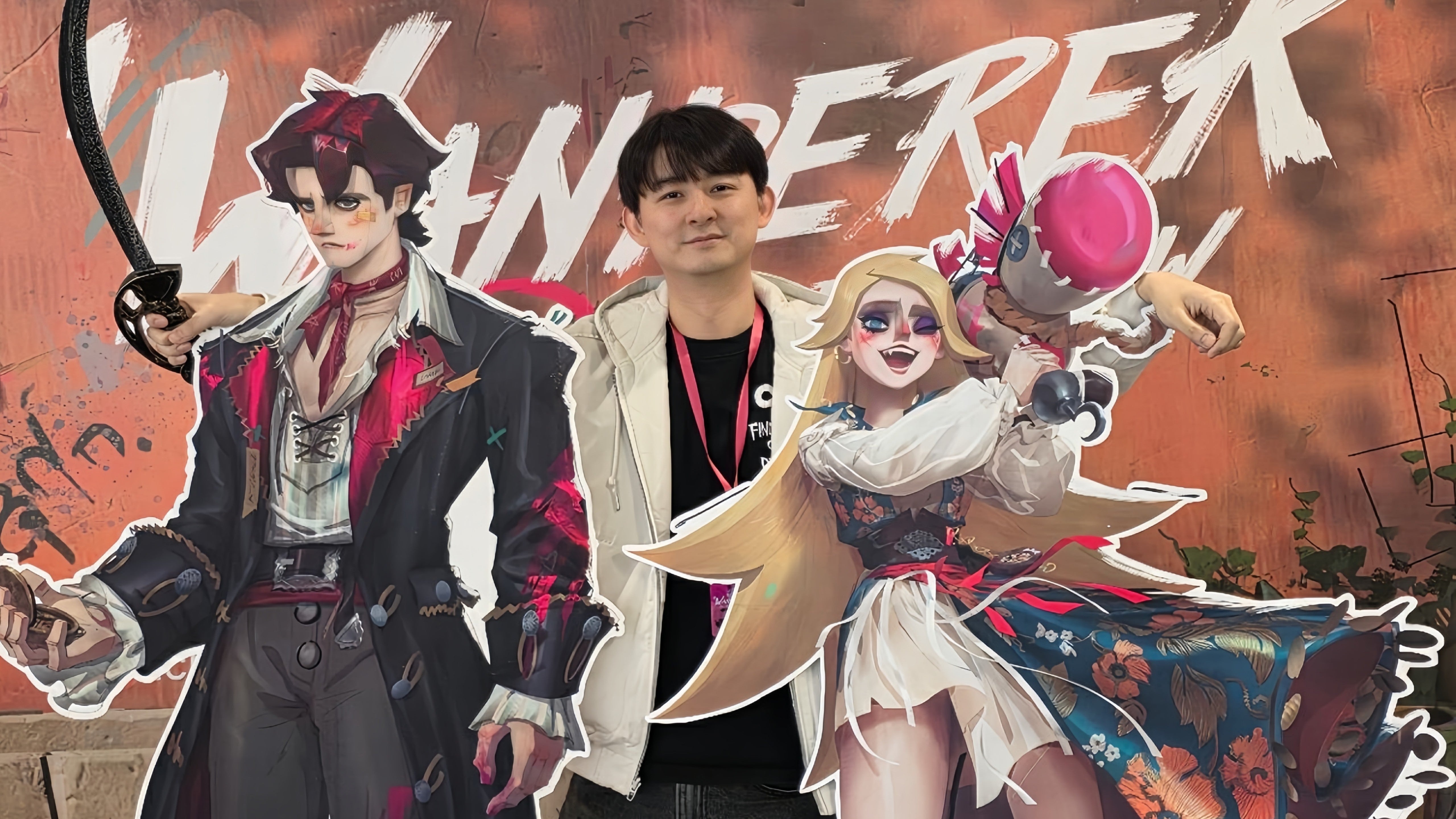
Alfie, the creative director for Sea of Remnants (using an alias as requested), highlighted the advantages of working within such an expansive campus. Alfie described it as “an environment ideal for creating,” emphasizing the value of shared spaces. “An openness is encouraged here that’s ideal for creation – especially with excellent canteens for communal meals! This fosters an open-minded approach, allowing for free creation to achieve development goals, which is crucial for producing quality products.”
Pirate adventure
Sea of Remnants is an ambitious game, the culmination of nearly seven years of development that began in October 2019, soon after Identity V‘s launch. The development team characterizes it as almost two distinct games. One segment is set in Orbtopia, a town bustling with hundreds of characters and diverse minigames, including drinking challenges, mahjong, and music games reminiscent of Rhythm Heaven. The other part involves an expansive open sea world, filled with puzzles, opportunities for looting, turn-based combat, and hidden mysteries.
The international vision of Sea of Remnants is particularly evident in its character design. Kairos, the lead artist, stated that the goal was to present “a refreshing pirate image.” The team examined existing pirate portrayals, such as the grimy, gold-toothed characters in Pirates of the Caribbean and the manga-inspired aesthetic of One Piece. Their aim was to create 16th-17th century pirates infused with a contemporary style. This approach signifies a game influenced by global sources and targeting a worldwide audience, rather than solely a domestic one.
.png?auto=webp "Inside NetEase: A Look at Sea of Remnants Development and Chinese F2P Monetization 3")
The development team collaborates closely with international artists, including Japanese artists Takayuki Takeya and Ryu Oyama, as well as Ashley Wood, who previously worked with the studio on Identity V. These global perspectives contribute to the game’s distinctive visual style. For free-to-play titles, developing compelling characters that players wish to invest in is crucial for long-term engagement. Player investment in characters has expanded beyond the game itself, with in-person events increasingly serving as a vital component for community building, sustainment, and revenue generation.
Investment beyond the game
Major Chinese free-to-play games attract hundreds of millions of domestic players, leading to widespread recognition for their characters. This popularity creates avenues for real-world engagement, including pop-up stores, food and beverage partnerships, blind boxes, and various merchandise.
Blind boxes, which are sealed containers holding mystery merchandise, are highly sought after in China. It is increasingly common for franchises to create blind box figures based on their characters for fans to collect and share, with the element of surprise being a core attraction. The blind box market reached 10.1 billion yuan ($1.4 billion) in 2020, with projections of 150 billion yuan ($20.7 billion) by 2025, representing only a segment of a larger merchandising strategy.
Within a market of 700 million players, where free-to-play titles are dominant, game revenues are significantly boosted by physical and digital merchandising, alongside frequent brand collaborations. In China, these partnerships contribute substantially to revenue, beyond mere public relations for the game. During a visit to a Hangzhou convenience store, blind boxes for Genshin Impact and League of Legends were observed, and Joker Studio’s Identity V even had a nationwide collaboration with a bottled tea brand.

This monetization approach has naturally influenced the design of Sea of Remnants, though designers have strived to prevent these elements from compromising core gameplay. The success of Identity V provided valuable lessons on how Sea of Remnants can extend its experience into the physical world, thereby reducing its dependence on in-game purchases for profitability.
Kairos indicated that Identity V offered the team experience in cross-disciplinary collaboration, enabling them to “learn what designs are welcomed or less-welcomed by players both inside and outside the game, as well as how to collaborate with companies in these other industries.” A key finding was that players appreciate seeing their own experiences mirrored in characters.
Kairos mentioned an Identity V character whose backstory centered on dental insecurities, leading others to perceive him as “ugly” despite his inner honesty. Similarly, Sea of Remnants features Captain Edward, a character who is messy and neglects personal hygiene. Exploring his background reveals a history of personal struggles and a failed pursuit of true love.
Such relatable characters can encourage players, even those who do not make in-game purchases, to invest in physical merchandise of their favorite characters, thereby creating an additional revenue stream for the game.
.png?auto=webp "Inside NetEase: A Look at Sea of Remnants Development and Chinese F2P Monetization 5")
Alfie confirmed that the current priority is the game itself as it approaches its beta phase. However, merchandising opportunities beyond the game are “certainly under consideration for potential future expansion.” Alfie noted that “these events have been very popular with Identity V players, and Sea of Remnants also requires monetization to remain operational. The focus is on creating an enjoyable game for players, and not every design is solely driven by monetization. Yet, if Sea of Remnants succeeds, such events will become increasingly vital for the game’s future growth.”
Events of this nature are frequently overlooked in markets outside Asia, yet they can significantly contribute to a game’s long-term visibility and viability, as demonstrated by the creators of Sky: Children of the Light.
The question of AI
While games constitute a significant part of NetEase’s operations, the company also encompasses e-commerce, food and beverage, cloud music, online platform services, and AI. Notably, NetEase Game Labs, the division dedicated to AI in game development, is credited in Sea of Remnants.
NetEase has a background in utilizing generative AI within games. For instance, the game Eggy Party, similar to Fall Guys, incorporated generative AI into its user-generated content system. Moreover, the Chinese market generally exhibits greater acceptance of generative AI compared to other regions, with over 190 models and more than 600 million users in the country.
.jpg?auto=webp "Inside NetEase: A Look at Sea of Remnants Development and Chinese F2P Monetization 6")
Despite NetEase Game Labs being credited in Sea of Remnants‘ opening, the Joker Studio team maintains that no AI work is currently integrated into the game. However, they have explored AI and suggest its potential future application in shaping characters or other game elements.
Alfie explained that “AI is a very important business of NetEase, and they have their own independent department dedicated to AI development, but they’re very independent of us, so we don’t hear everything they’re doing.”
Alfie further elaborated, stating that “game development is highly complex, involving numerous pipelines and professional procedures. Therefore, no pipeline or procedure is currently seen as being replaced by AI. In the future, AI might have the potential to assist or even replace a specific pipeline. The team has considered integrating AI into gameplay, but it is not presently used for design or similar functions.”
Influenced by past console restrictions and the growth of PC and online gaming, the Chinese games industry has consistently led in free-to-play development. It has refined methods for sustaining these games and integrating them into wider culture beyond the digital screen. The industry has mastered creating large-scale AAA free-to-play titles and minimizing overt monetization by developing engaging experiences that encourage players to purchase merchandise or attend real-world events.
Sea of Remnants, featuring real-time, simulator-style ship battles, an expansive open world, and plans for hundreds of characters, exemplifies the industry’s progress. It surpasses Joker Studio’s prior achievements, offering a truly novel experience in a highly competitive market. The game represents a global declaration extending well beyond NetEase’s Hangzhou headquarters.
